
From 1997 to the digital factory: DBIZ delivers the full DBIZ Foundation platform for Leepak
Founded in 1997 and now in its third generation, Leepak is one of Vietnam’s leading exporters of plastic packaging, shipping some 40,000 tonnes of product to international markets each year. To make an operation of that scale accurate to the last figure, DBIZ Digital Business Platform Joint Stock Company deployed the DBIZ Foundation platform to unify procurement, production and warehousing, together with an AI agent that automates data entry.
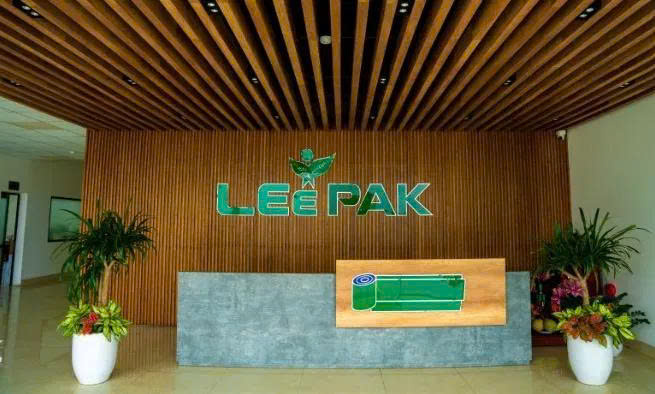
Leepak — company profile
Leepak’s products range from shopping bags, food bags, zipper bags and refuse sacks to PE gloves and plastic film — serving retail chains and major partners worldwide. Its partners include names such as Lidl, Aldi and Edeka, alongside leading raw material suppliers including Dow and Borouge.
The challenge: export-grade production, but data still keyed in several times over
Before the deployment, Leepak tracked production and inventory manually with spreadsheets. Production staff recorded figures on paper by machine and by shift; a statistics clerk then consolidated them into an Excel file, and the data was keyed in once more to the system. Warehouse logs were kept separately for reconciliation.
For a business sending 90% of its output to the US, EU and Japan, a discrepancy in the figures is not merely an internal inconvenience — it is a risk with the world’s most demanding customers on traceability and quality. The more times figures are transcribed across thousands of documents and hundreds of machines, the more likely actual output and system inventory diverge. The core problem was never “recording the numbers”; it was entering each transaction once and letting it flow end to end from production through warehousing to accounting.
Operating scale on the system
The solution: a unified DBIZ Foundation platform with seamless modules
DBIZ built Leepak a complete DBIZ Foundation platform, connecting previously separate functions into one continuous flow:
- Procurement: end-to-end management from purchase order and goods receipt note through to purchase invoice — with close to 2,500 purchase orders and more than 2,500 goods receipt notes processed; item extraction from purchase orders and price control against agreed price lists are supported.
- Accounts payable: a flow from payment request to payment document (cash voucher or payment order), supplier advances and allocation of advances against invoices on a FIFO (first in, first out) basis. Close to 800 payment requests have passed through this process.
- Production: from production plan and work order through to Leepak’s three characteristic stages — mixing, blowing and cutting — recorded on stage tickets by machine and by shift: mixing resin and pigment, blowing HD/LD film rolls, then cutting, folding and sealing into roll bags, flat bags and T-shirt bags. More than 100 machines of various types have been standardised onto the system.
- Warehousing: every movement of raw materials, finished and semi-finished goods and internal transfers passes through goods receipt and issue notes, replacing the separate warehouse log. From more than 200 receipt and issue notes, the system generates close to 10,000 inventory journal entries, giving an instant inventory picture across 40 warehouses.
- Opening data setup: standardising and loading the opening data — customers, suppliers, item codes, inventory and receivables — so the system operated correctly from day one.
The essential point: each transaction is entered once and flows through production, warehousing and accounting — with no duplicate entry and no discrepancies between departments.
The highlight: an AI agent automating data entry from Excel and email
Rather than requiring staff to retype every line, DBIZ built an AI agent to act as an automated data-entry clerk:
- It scans and reads input data from structured Excel files — the production log and the warehouse log.
- It integrates with the company mailbox to receive report files and documents sent by email automatically.
- It cleanses, maps and creates goods receipt and issue documents and stage tickets automatically, with no manual work — several hundred automated entry sessions have been processed.
- There is a review screen: once the agent has processed the data, a user checks it as an approval step; only on approval does the system commit the documents.
- Strict security standards are applied: encryption, access permissions and authentication protect the information.
In short: the machine does the heavy, error-prone work — reading, gathering and matching figures — while people retain the final decision at the approval step.
The value delivered to Leepak
- A single source of data: production, warehousing and accounting all work from one system, ending the era of a separate file per department.
- Export-grade transparency and traceability: every batch of bags is traceable from the mixing batch and blowing machine through to the cutting order — the foundation of trust with demanding international customers.
- Less manual entry, fewer errors: automating the retyping steps that were most prone to error when done by hand.
- Instant inventory transparency: output and inventory update the moment a document is approved, reflected in close to 10,000 automatically generated inventory entries.
- Control is retained: the review and approval mechanism keeps the data automated without losing control.
- Safe to extend: the standardised DBIZ Foundation platform allows further modules and processes to be added later without disrupting the system.
Digital transformation is not the digitalisation of isolated fragments but the connection of every activity onto one unified platform — simple to use, transparent enough to trust, and deep enough to keep growing on.
— The DBIZ delivery principle
What this says about DBIZ
For a brand 27 years old with 90% of its output exported, giving Leepak a digital foundation meant respecting the particular processes of the factory floor while raising data standards to an international level. The project further demonstrates DBIZ’s capability in building “Make in Vietnam” digital business platforms for manufacturers: from understanding the mixing–blowing–cutting process, through designing a multi-module system on DBIZ Foundation, to applying an AI agent to automate the heaviest data-entry work — helping Leepak continue to make an excellent first impression with every piece of packaging it sends into the world.
https://dbiz.com